Download Transcript
Spencer Levy
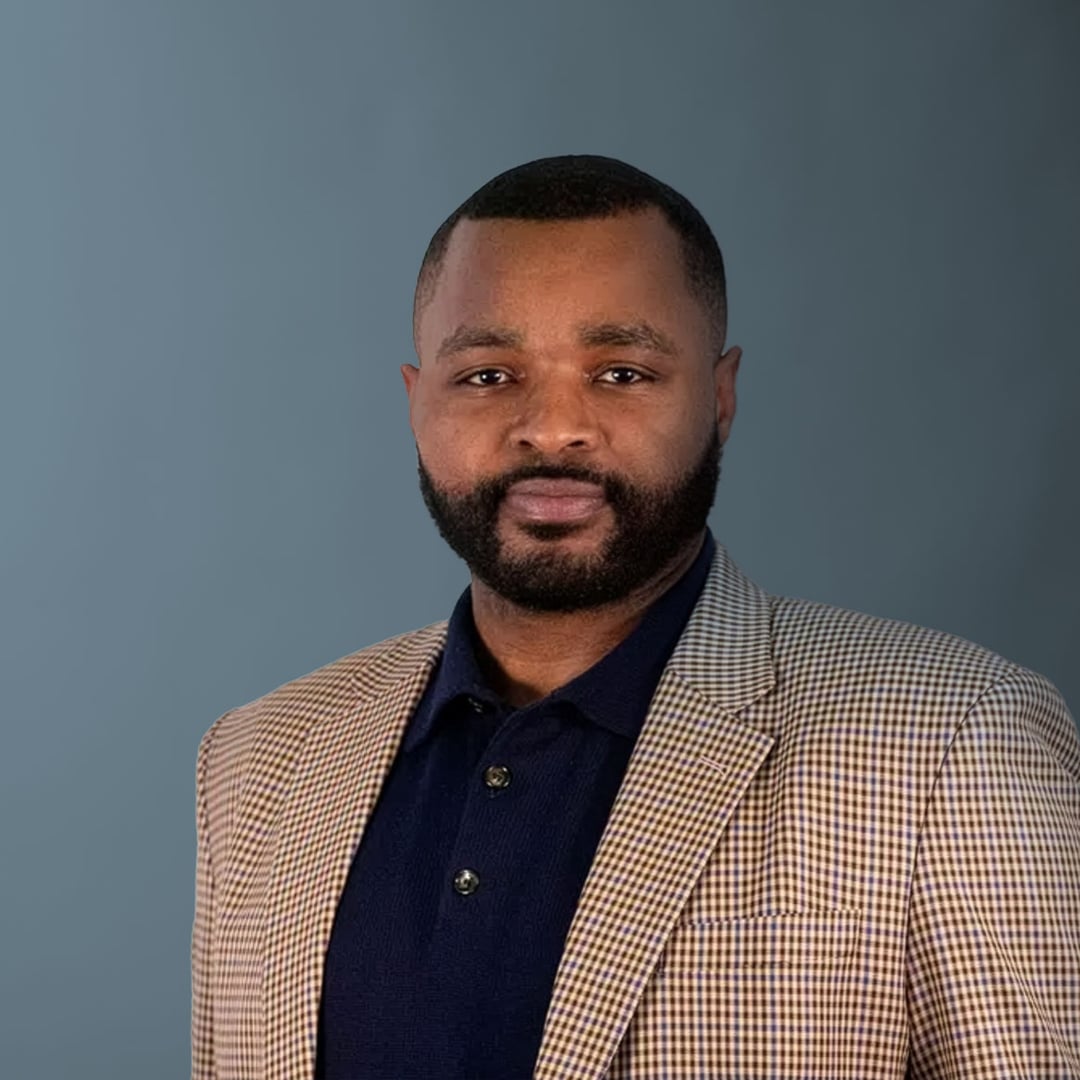
You know the old saying, two for the price of one? Well, we've got a deal for you folks: a special edition from the recent ICSC in Las Vegas. The topic is retail, of course, and our guest is none other than CBRE's Americas Head of Retail Research, Ebere Anokute.
Spencer Levy
Welcome back to The Weekly Take from the ICSE in Vegas and I'm here with my good friend Ebere Anokute. Ebere, thanks for coming out.
Ebere Anokute
Spencer, thank you for having me. So excited to be here.
Spencer Levy
Well, I'm excited that you're here, period. You've only been a CBRE less than a year, right?
Ebere Anokute
Get less than a year, definitely, but getting accustomed very quickly and really excited to be part of the team and to understand the scope of the platform.
Spencer Levy
There's no event like the ICSE.
Ebere Anokute
That's true.
Spencer Levy
Not only are you gonna have 25,000 or more of your closest friends, of course. But we have a couple of cocktail parties tonight. That's where the real work is done here. The real work that's done here is by meeting the people and picking up little nuggets in addition to the unbelievable data that you do on a day-to-day basis.
Ebera Anokute
Absolutely. It's always a different experience every year. So excited to see what this year has in store.
Spencer Levy
We just had Adam Ifshin, our good friend from DLC, on the show. And he talked about the tremendous evolution of the space. And I think the key piece of evolution is the shift from a capital markets mindset, while it's still important, to an operator's mindset, because interest rates aren't coming down. You gotta operate better. You gotta to operate differently. What do you think?
Ebere Anokute
I mean, it's spot on. I was able to read the DLC white paper, the prices is next, where they spoke about the importance of these operators. And I fully agree, we're in a space now where, with availability being so tight across the country and fundamentals being so strong, it really is the operators of these retail spaces that are driving the evolution of the space to the next level. So I'm definitely excited to see where these retail operators go. I know that there's–it's always such an evolving landscape when it comes to retail, whether it's from e-commerce or all the different sort of factors that play into physical retail, but the sort of prestige that we're seeing with some of these operators these days is really exciting to me, especially having come from the operator side previously, so I have some experience there as well. Well, this is.
Spencer Levy
Well, this is one of the beauties of this very event, because you've just had Adam, a big owner here. You have all the big retailers here, You have the brokers here. You have the property managers. Everybody's here. But what you have, which is different than most, is you have this deep, not just data, but the data analysis, the different types of data, understanding it better, deeper than most. Tell us about that.
Ebere Anokute
Absolutely, the data has been showing us for a while a narrative that's different than what is projected in the headlines, right? Even going back to when I joined the industry, it was at the height of the, I'll put major air quotes, the retail apocalypse. All the stores are closing, everything's shifting online, no one is going to these high streets, and that was the narrative that was pushed out in pursuit of clicks, frankly. But what we were actually seeing in the numbers was that at that time, only 10% of overall retail sales were actually happening online, right. That percentage has now increased to maybe 16%, which in my opinion sort of follows the natural flow of life and technology. So that's not something that's really gonna reverse in our lifetime. But the sort of exponential, crazy rise of online versus in store just was not reflected in the actual numbers. So being able to hear what people were saying and then add some actual context with data is an important role that I take very seriously, and I love having that role.
Spencer Levy [00:03:37]
Great, well, you know 16% is actually quite a bit lower as a number than I've typically heard I sometimes heard as high as 25 or 30 percent numbers what accounts for the difference?
Ebere Anokute [00:03:46] The data source that we look at is the Census Department. They have a quarterly e-commerce report where they break down overall retail sales, excluding food service, which is important because overall retail sales that they typically report do include food service. But for the e-commerce portion, they don't include food services. So that number has been growing really steadily. It was around 12% prior to the pandemic. During the pandemic, we saw – obviously when all the physical stores were closed down due to those different restrictions across the country – there was not the opportunity to shop in person. And so as a result, it shot up to 16% at that time. And if you were listening to analysts at that time, they would have told you that it was gonna continue to increase exponentially from there. But what we actually saw, again, going back to what the data tells us, is that as soon as stores were reopened, as soon those restrictions were lifted, that number went back down to maybe 13% or 12%. And then it started to, again return to the gradual pace of increase. That it had been on before, so now, six years later, is where we're at 16.5% or so.
Spencer Levy [00:04:46]
Let me give a few, just, counterpoints for just a moment. One of them is supply. We're not seeing any more supply. If it's so good, why aren't we building more of it? And the second, and this is one I think is probably more controversial, which is I love grocery anchored retail. Everybody loves grocery anchored retail, which is why I never recommend it to my clients, because it's like it's price to perfection. So supply, grocery anchored retail, what do you think?
Ebere Anokute [00:05:07]
You're definitely spot on with that. We spoke a little bit about the grocery anchored situation in previous weeks. And I really appreciate your perspective, right? Because when it comes to recommending to a client where they should be investing their capital, something that's price perfection leaves very little wiggle room for actually getting a good deal, right. So I definitely understand that. With that said, grocery is definitely an essential category, right, throughout the pandemic, that was one of those categories that was still open, that was able to operate maybe not in the same exact way that they were before. And I feel like they saw a lot of gains during that time, given the fact that they were one of the few operators that were open and we were not able to dine in restaurants or to have any sort of in person dining experiences. So we had no choice really, but to buy food and cook it at home. Those gains that they made during the pandemic, they reinvested back into their existing stores in regards to upgrading their capabilities. Right. So I know the grocery stores that are by me in New York, in Harlem, uptown Manhattan, I saw all of them get a whole new row of freezers. Right? Really tangible improvements that were made to the experience for the customer in the store. And then now what we're seeing as those gains have continued to grow and I've seen some data that has shown that the cost of spending in restaurants has increased by about 60 percent since 2019, whereas grocery pricing has increased about 20 to 30 percent in that same period. So when it is still so expensive to go out and to eat food outside of the home, which – not to talk down on that, we all love to go out to a nice dinner and enjoy ourselves there – but grocery still is an attractive option for a lot of American consumers, especially in this uncertain economic climate that we're in. Is there a recession? Is there not going to be a recession and when is it going to happen? With that in mind, we're seeing a lot of pullback on discretionary purchases and experiences and a lot of people are reverting back to those staples like grocery. And so as a result, we've seen a lot of gains in that space in the last year, Almost a trillion dollars spent on grocery in 2025 which is now informing nearly 21 million square feet of new space for grocery retailers that are opening just this year in 2026 alone. So again, if I'm an investor, it obviously is a tricky space to get into. There's a lot of competition for sure, but the reason that there is that competition is because of the solid fundamentals and the consumer spending growth and the trend of consumer spending that is supporting all of that.
Spencer Levy [00:07:24]
The place where I think we've still got a long way to run is predicting the future, is the predictive analytics. And so location intelligence is one of the categories. How far along are we on saying–predicting the future, location intelligence, other things that are forward-looking?
Ebere Anokute [00:07:41]
Things like that are one of the things that really make me excited about being part of the CBRE team now because our location intelligence platform is really the best in the business. We're able to really model how retailers are going to perform when it comes to forecasting their sales and letting them know whether they'll be able to make more money in this center versus that center, which again, coming from the operator side is really, the decisions that are being made. If I decide I wanna go to this market, it becomes a matter of do I go to the center or the center and why or why not? And that sort of predictive analytics forecasting capability is really a differentiator for those operators. And so the CBRE location analytics team is top of the line when it comes to that. And so I'd say we're in a great space when it comes to that. There's a lot of other firms and companies that are also able to do it, but when you combine that predictive analytics and location intelligence with all the other things that we're able to do at the CBRE platform. It really makes it for, like, a one-stop shop for anything that operator or client might need. That scale and the resources of the organization are really what excite me the most.
Spencer Levy
So what are some of the emerging trends that the data is telling us? Give us the big picture trends you're seeing and what's the data informing us about?
Ebere Anokute
Sure. On the occupier side, something that I'm focused a lot on right now is on service tenants. That's something I'm really excited about right now. And when I say service, I mean anything from beauty services. So nail salons.
Spencer Levy
Let's pause there for just a moment because I was actually at a little center next to my house in Baltimore, Maryland yesterday and I noticed next to the Bank of America and the restaurant, they had a new nail salon. They had a new hair cuttery place and and it felt great. I mean local owners. I love local owners.
Ebere Anokute
Of course.
Spencer Levy
The problem is that they had low credit compared to say a Bank of American or Starbucks How do you juxtapose those two things – they're cool, but the credit might not be as good?
Ebere Anokute
I think that's definitely a bit of a gamble, which I think everything we do to a certain degree is a bit a gamble. But I think the real benefit or value that those tenants can bring to the center is foot traffic. So when it comes to these services, almost similar to grocery, where we need to come shop for groceries on a regular weekly basis, these are services that people are getting done on a regular basis as well. That means that they're coming back to this center. Again, when it comes to these excellent outperforming operators, right, I'm gonna go back to the barber. I've had the same barber for the last eight years and I don't plan to go to anyone else, right, because I trust that he's gonna do a good job. He knows me. He knows the shape of my head, et cetera. People who get their nails done, who get lashes, they go to good operators and they continue to go back to them on a regular basis because none of these things are permanent, right. So we need to go and get them redone or get them touched up. And so that repeat foot traffic benefits not only the owner of the center, but the other tenants that are adjacent to these operators as well. Because when I go back to the center constantly, almost intrinsically, I'm getting an understanding of who else is located there. I know who's there. I know the parking situation. I know where I can park. I know how easy it is to access. I know where else I can go from that center if I have other errands to run, you know? So I think that repeat foot traffic is not something to sleep on. It's definitely a gamble to take on a tenant that might not have the same credit as maybe a national operator, but it still is very important to get that repeat foot traffic back in, and that's what these service tenants are providing. And I've been hearing from a lot of different owners and others in the business that they've been really seeing a lot growth in that category when it comes to these different service tenants and also relying on them for that stability and for taking those inline spaces and allowing their occupancies to be as close to 100% as possible.
Spencer Levy [00:11:11]
I think what some people don't realize is that there's certain services that loyalty is forever, if it can be. So here's a shout out to my barber. There you go. A shout out for my barber, Tony, who cut my hair from the age of four till the age about 40 until he passed away, okay? Same barber, every time I need a haircut, same guy. Didn't think twice.
Ebere Anokute
Because why would you? You know you trust him? He's a great operator You know that you're gonna get the right experience when you go there and so building up a center with all of those different Excellent operators in the service category or whatever category there may be again again grows the occupancy or keeps occupancy at a stable level, you know, above 95%, which then makes the center attractive, whether it's for acquisition or whether it is for larger national tenants who might be interested in the space, they're gonna say, okay, well, a lot of people are coming to this center, right? We're gonna use our different foot traffic metrics to support the fact that this center is getting this number of repeat foot traffic. And again, coming from the operator side, I can tell you, that's what we're looking at when we're determining where to go.
Spencer Levy [00:12:11]
The expression I've used quite a bit is credit versus cool, right? It sounds like a pithy way to put it, but you can't always have just a bunch of nationals in there. You've got to mix it up because the locals create a sense of energy and maybe some loyalty that'll help the nationals.
Ebere Anokute
Absolutely, absolutely. And you know, that is what really takes a center from being somewhat soulless to being a part of the community where people know that they can go and that they, again, like you mentioned, go back to for decades, okay. So that sort of loyalty is really unmatched and difficult to fabricate. You know, it really comes as a result of trust being built over years. And so there's a lot of benefit to taking a bit of a risk on a less, you know credited tenant who will bring consistent repeat foot traffic to your center.
Spencer Levy
The next several years are gonna be different than the last 15 years, and the fundamental thing I point to is interest rates are gonna stay high. It's gonna prevent some new supply because it's expensive to build, but at the same time goes right back to that operator versus the capital markets focus of what we do. But what I also think it does is it opens the door to secondary markets. What do you think?
Ebere Anokute
I fully agree with you. I mean, we saw even in the first quarter of this year, some of the highest rent growth and absorption levels were coming from markets that would be deemed as maybe secondary or tertiary, right? And so a lot of those were in the sunbelt and right now aren't necessarily as populous as maybe some of coastal or other major cities, but we've seen a lot of migration domestically to that region of the country. Retail follows the people, right, so that's really informing the growth of retail in these areas – how much the population has increased. So I fully agree. Another thing that we're seeing again with construction completions being so low, we're saying that there's a lot of appetite for new construction amongst retailers. What we saw was that the markets that led the country in new development were also the same markets that led the countries in absorption in Q1, right? So that was Phoenix. That was a lot of places in Texas – Dallas, San Antonio, Houston as well – and Florida as a whole. We're seeing a lot of appetite, like I said, for that new construction and the absorption is sort of following that demand. And like you said, with very little of that new development happening in these major cities, that demand is now shifting to those secondary and tertiary markets. So there definitely is opportunity there, especially because they might not be priced to perfection in the same way that we've discussed. And so that leaves them some wiggle room to get good deals done.
Spencer Levy [00:14:32]
Let's go back to the data. Sure. Where is the data today? Where will it be five years from now? So we're sitting here in 2026. At ICSE 2030, What's the fundamental change in the data? What's a fundamental change to the analysis?
Ebere Anokute
I would just love to see more robust data for retail. An issue that we run into often is that typically retail is part of an asset that is of another class, right? So maybe it's the bottom floor of an office or of a hotel or things like that. Obviously in other parts of the country, there's open air retail that's strictly retail. But in general, just given how difficult it is to sort of break that down, it's hard to find reliable retail data. On the office side or even on the industrial side, they can tell you exactly how much square footage was leased in this quarter in this market to the decimal place, right? Retail does not always have that same availability of data. So that's something I would love to see. There's definitely a long way that we can go there, but that'll benefit everyone, especially as institutional confidence returns back to the retail sector.
Spencer Lev
I think it's back.
Ebere Anokute
It's back, right, so it's only benefiting everyone who's involved in the space that we have more reliable data and so. That looks like people being on the ground and these data companies being more hands-on with how they collect. Because I know prior to some of these AI agents, when it came to me trying to understand how much space in this category was leased this year, I was scouring through news articles and through internet results to try to find anything and to bring up some sort of number that I could produce. Now, obviously, AI is helping us to do that a lot more quickly, which is excellent and a great use case.
Spencer Levy
Garbage in, garbage out. The data's still gotta get better for Mr. or Ms. AI getting it right.
Ebere Anokute
Exactly, so that's something that I would love to see going forward.
Spencer Levy
Well, on behalf of The Weekly Take, what a pleasure to have my colleague, my friend, Ebere Anokute, Head of Retail Research for CBRE in the Americas. Thanks so much for coming out to The Weekly Take.
Ebere Anokute
Spencer, thank you so much for having me.
Spencer Levy
If you're in the market for more retail, check out our archives for the other episode we did from the ICSE with DLC Management. Adam Ifshin, and we'll be back with our regular scheduled programming next week. Thanks for listening. I'm Spencer Levy. Be smart. Be safe. Be well.

.jpg)